
Understand AI in schools, local homework rules and how parents can help teens use it responsibly.
Key Takeaways
- AI homework rules vary by school and assignment. When in doubt, teens should ask their teacher before using it.
- Permission to use an AI tool doesn’t mean it’s allowed for every task, even something as simple as making flashcards.
- AI can help teens evaluate ideas, but their own thinking and effort still need to come first.
- Start with curiosity: Ask your teen how AI helped, whether it was allowed and how they checked its answers.
As artificial intelligence (AI) becomes part of daily learning, Fredericksburg-area parents may wonder when it’s appropriate for their teens to use it for homework and classwork. While the guidelines can sometimes feel unclear, the answer largely depends on each school division’s policies and individual teachers’ expectations.
We explored how our local high schools are addressing AI use in the classroom and how families can help their teens make responsible choices at home. Here’s what parents in Fredericksburg, Spotsylvania and Stafford need to know.
Wondering how AI could affect the way your teen learns? Psychologist Laura Kastner explores what kids may miss when AI does the thinking for them.
How Is AI Changing School?
Even before generative AI, teachers had to navigate students taking shortcuts or cheating. In the past, copying an entry word-for-word from the Encyclopaedia Britannica was an obvious infraction, but today, students may be unsure where using AI ends and cheating begins.
Using AI to brainstorm ideas or organize an outline may seem harmless at first, but students don’t always know where to draw the line between getting help and letting AI do the work for them.
“Now with AI, you can punch a prompt and get basically everything you were hoping for,” said Anthony Durso, head of upper school at Fredericksburg Academy. “And that has just made it really easy for those kids who are maybe already disposed towards cutting corners.”
Durso explained that even when teachers permit AI use for specific assignments, those exceptions can make it harder for students to understand what constitutes cheating.
“It almost feels like it’s okay-ish to use it,” Durso said.
Beyond cheating, educators also worry about AI’s effects on learning. According to College Board research, 90% of AP teachers surveyed worry students will be less likely to develop critical thinking skills as generative AI use grows. Nearly half said they had some understanding of the technology but still needed guidance themselves.
Stay connected with Fredericksburg Parent
Get free things to do, local parenting advice, education and camp guides, and special offers for families in the Fredericksburg area delivered straight to your inbox.
Understanding AI Policies in Virginia Schools
In 2026, Virginia lawmakers passed House Bill 1186 and Senate Bill 394, directing the Virginia Department of Education to develop guidance for the safe, ethical and equitable use of AI in public schools. Both bills also require local school boards to adopt policies consistent with that guidance.
Here’s a look at what our local school divisions are doing.
Fredericksburg City
Fredericksburg City Public Schools began exploring how AI can support teaching and learning while setting boundaries for its use. In a June 2026 division update, officials announced an AI Division Leadership Team to develop guidance, evaluate instructional tools and help staff build confidence using the technology.
On Oct. 22, 2026, the division also invited students, educators and community members to weigh in on AI’s role in education during a Superintendent Community Roundtable. The discussion gave school leaders and community partners an opportunity to hear how students view the growing use of AI in classrooms.
Fredericksburg City Public Schools did not respond to a request for comment on AI policies.
Spotsylvania County
Spotsylvania County Public Schools’ 2026-27 Parent-Student Handbook places teachers at the center of decisions on how students use AI. Students may use it with teacher guidance or permission, but must follow any instruction prohibiting it for a particular assignment or project. The guidelines also call for students to be transparent about their use and disclose whenever AI contributes to an assignment.
“As we integrate the use of generative AI into our classrooms, we emphasize the importance of using this technology in a purposeful, ethical and responsible manner,” said René Daniels, chief of communications and community engagement at Spotsylvania County Public Schools.
Rather than revising its Acceptable Use Policy or Student Code of Conduct, the division added AI guidance to its existing Technology Guidelines.
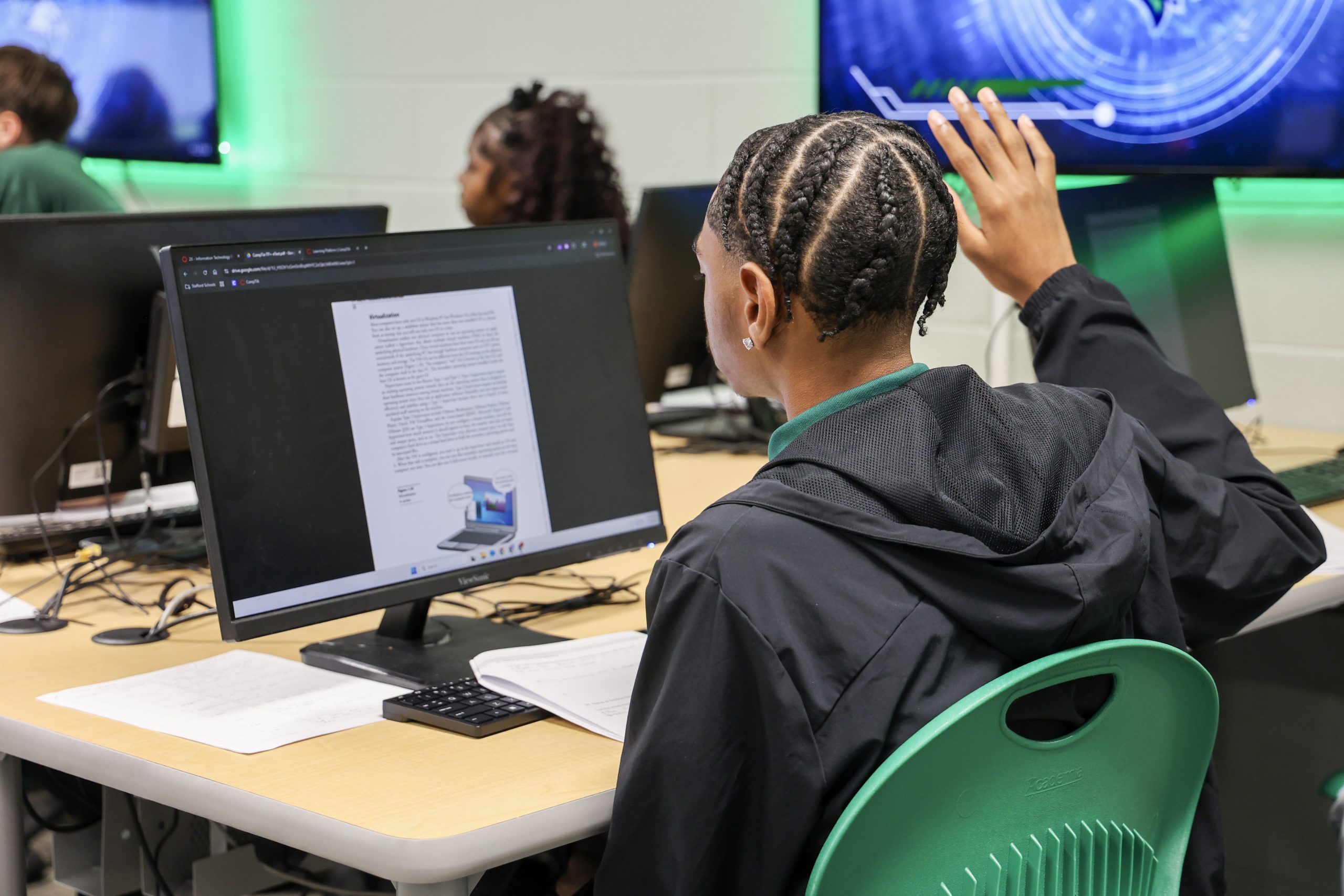
Spotsylvania began training teachers and staff on generative AI during the 2024-25 school year, gave teachers access to Google Gemini in July 2025 and extended access to students in January 2026. Its initiative focuses on personalized learning, accessibility, digital literacy and critical thinking. As the division states in its guiding principles, “AI serves to enhance, not replace, staff expertise and student creativity, acknowledging its limitations.”
Stafford County
For Stafford County Public Schools, individual teachers establish their own instructional expectations for AI use on specific tasks.
“High school students may use division-approved Google AI tools, including Gemini and NotebookLM, but access does not mean AI is appropriate for every assignment,” said Sandra Osborn, chief communications officer at Stafford County Public Schools. “A central component of our approach is helping students understand the difference between using AI to enhance their thinking and allowing AI to replace it.”
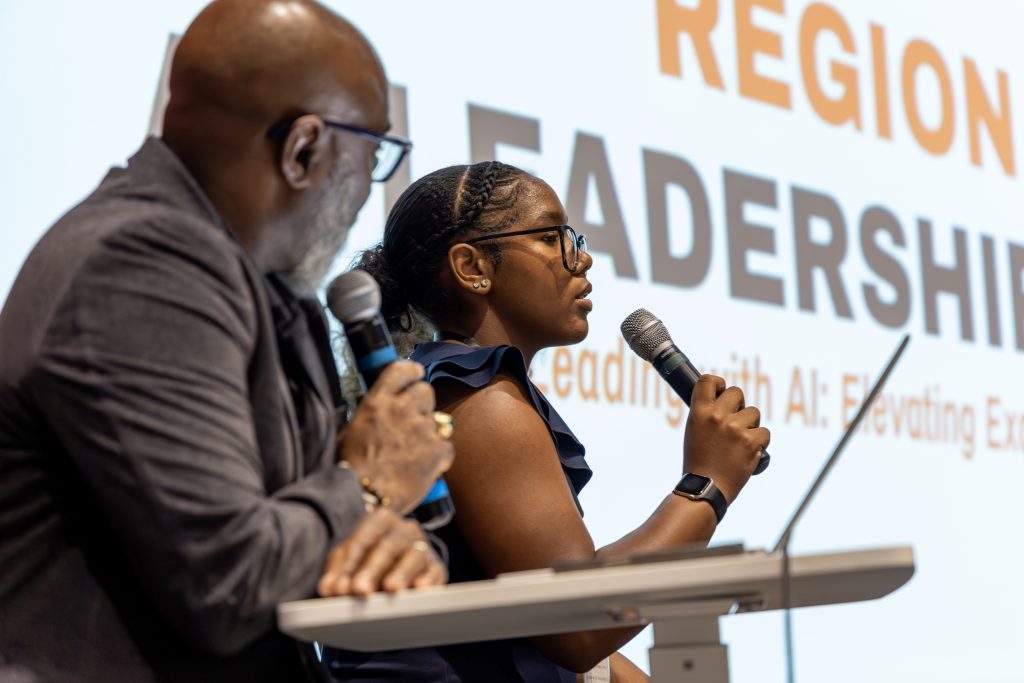
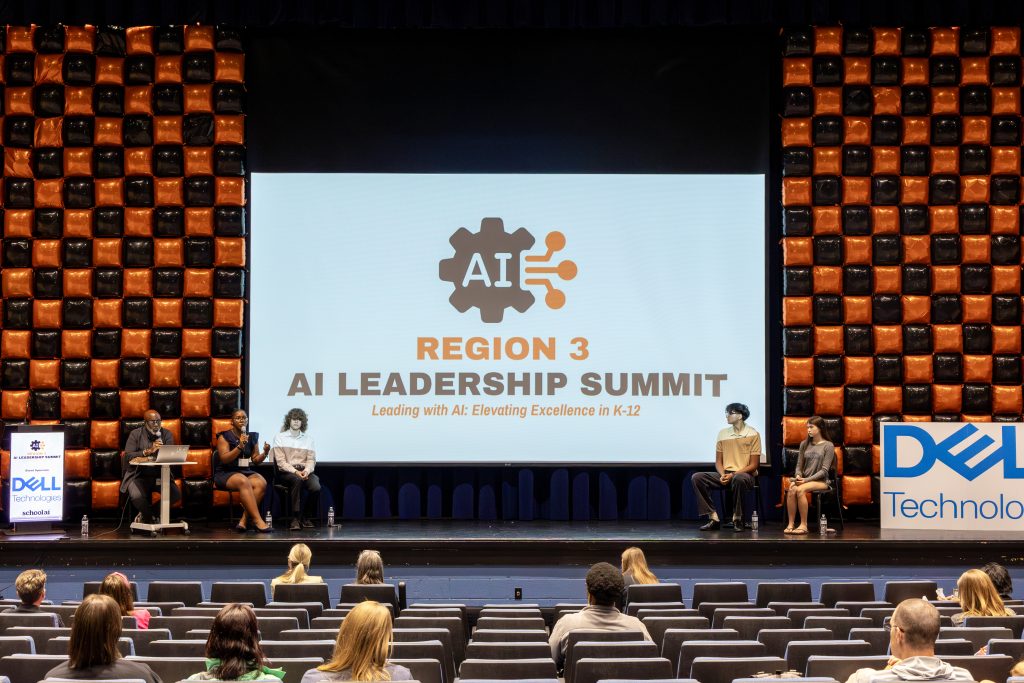
The division hosted a Region III AI Leadership Summit at Stafford High School on June 10, 2026, to discuss how AI should be handled when it comes to schoolwork.
For more information, families can also consult the division’s AI Framework and Policy 3114-P for information about responsible AI use, classroom expectations and student privacy.
Fredericksburg Academy
Private schools in the region are taking a similar approach. At Fredericksburg Academy, administrators have revised their technology-use guidelines to address AI.
“We updated our responsible use, internet use and safety policy to include specific AI language,” Durso said.
The honor code’s core principle remains that students may neither give nor receive unauthorized aid on an assignment. But Durso said that the updated policy focuses heavily on distinguishing between direct and indirect AI use.
For example, a student might be allowed to use AI to generate flashcards as a study tool for an upcoming test, but using AI to create those same flashcards would violate the rules if making them was the assigned homework. Durso said students may use AI as an initial research tool, but they must verify the accuracy of the sources.
When Can AI Support Learning?
Despite the risks of cheating, educators say that AI can be a helpful educational tool when used correctly.
“AI can still be a positive in the learning process if it’s used not to get rid of the friction, but to be part of the analytical process,” said Durso.
He offered an example: A student writes an essay independently, then enters the same prompt into an AI tool to generate a competing draft. The student then evaluates the differences between the two.
He explained that challenging students to spot the strengths and weaknesses of an AI-generated essay turns the technology into a valuable teaching moment.
“That’s analytical thinking in its own right, and that’s evaluation of an AI source,” Durso said.
Teachers are also finding constructive ways to embrace the technology.
“For educators, AI can support instructional planning, differentiation and the development of resources that address diverse student needs,” said Osborn.
How Can Parents Guide AI Use at Home?
Although Fredericksburg-area parents may feel uncertain about how AI should be used for school assignments, there are simple ways to help your teen navigate the technology responsibly.
“I would encourage parents to approach conversations about AI with curiosity rather than fear,” said Osborn.
Rather than asking a broad question such as “Are you using AI?” Osborn recommended asking more specific questions about classroom guidelines, including:
- “How did AI help you understand this assignment?”
- “How do you know the information it provided is accurate?”
- “Was AI permitted for this assignment?”
- “Can you explain what you learned without relying on AI?”
Osborn explained that these conversations encourage students to reflect on their learning, take ownership of their work and understand that AI should support their education rather than replace their own thinking.
Yanci Beers, a parent of a Stafford High School student, is still grappling with how quickly AI is advancing and what it means for human learning.
“On one hand, it’s an incredible technological leap, but on the other, it’s scary to think about people relying on a machine instead of developing their own minds,” Beers said. “As a parent, I’m still figuring out how to let my teen use these digital tools without losing the hands-on learning, memory and critical thinking she needs to actually know her stuff.”
Beers also wanted her daughter to see AI as a tool she controls, not one that does her thinking for her.
“At the end of the day, I want her to grow into an independent thinker who trusts her own mind and judgment above any program,” Beers said. “She can be friendly with technology and use it as a tool in her toolbox, but she shouldn’t lean on it so heavily that she gives away her independence, voice or self-reliance as a person and future professional.”
Ultimately, Beers set a clear boundary for her daughter’s AI use at home.
“The boundary I set is simple: the core ideas, voice and initial effort must come from your own head,” she said. “AI is just there to help you refine your work, not do the heavy lifting for you.”
If your teen is unsure whether AI is allowed for an assignment, encourage them to ask their teacher before using it.
Frequently Asked Questions
What AI homework rules should my teen follow?
AI homework rules depend on the school and the assignment. Teens should ask their teacher before using AI, follow any restrictions and be clear about how it helped when disclosure is required.
When does using AI for homework count as cheating?
AI use can cross into cheating when it provides unauthorized help or completes work students are expected to do themselves. Even making flashcards with AI may break the rules if creating them is the homework.
Are school AI policies in Fredericksburg the same everywhere?
School AI policies in Fredericksburg and nearby counties vary. Spotsylvania and Stafford put teachers at the center of assignment rules, while Fredericksburg Academy distinguishes between direct and indirect AI use.
How can AI in schools help students learn?
With teacher permission, AI can support learning by giving students material to evaluate. For example, a teen might write an essay independently, then compare it with an AI draft to identify strengths and weaknesses.
How can I talk to my teen about using AI?
Ask whether the teacher allowed AI, how it helped and how your teen checked its accuracy. Invite them to explain what they learned without AI so the conversation stays focused on understanding the work.
Which AI tools can Stafford high school students use?
Stafford high school students may use division-approved Google AI tools, including Gemini and NotebookLM. Access does not make them appropriate for every task; students must follow their teacher’s expectations.