

What is
lead?
Lead is a
naturally occurring toxic metal. While it can be found in our environment, it
serves no purpose in the body, and interferes with the function of organs such
as the kidneys, muscles and brain. While our bodies can eliminate many other
toxins through metabolism and excretion, we have no ability to purge lead.
Where can
lead be found in our daily environments?
Lead has been
used in a number of products over the years. As national and global health
authorities have learned more about the dangers of lead poisoning, more
regulations have been enacted to control where lead can be found. But we still
have many lead hazards that could pose a threat to children here in Virginia.
The most
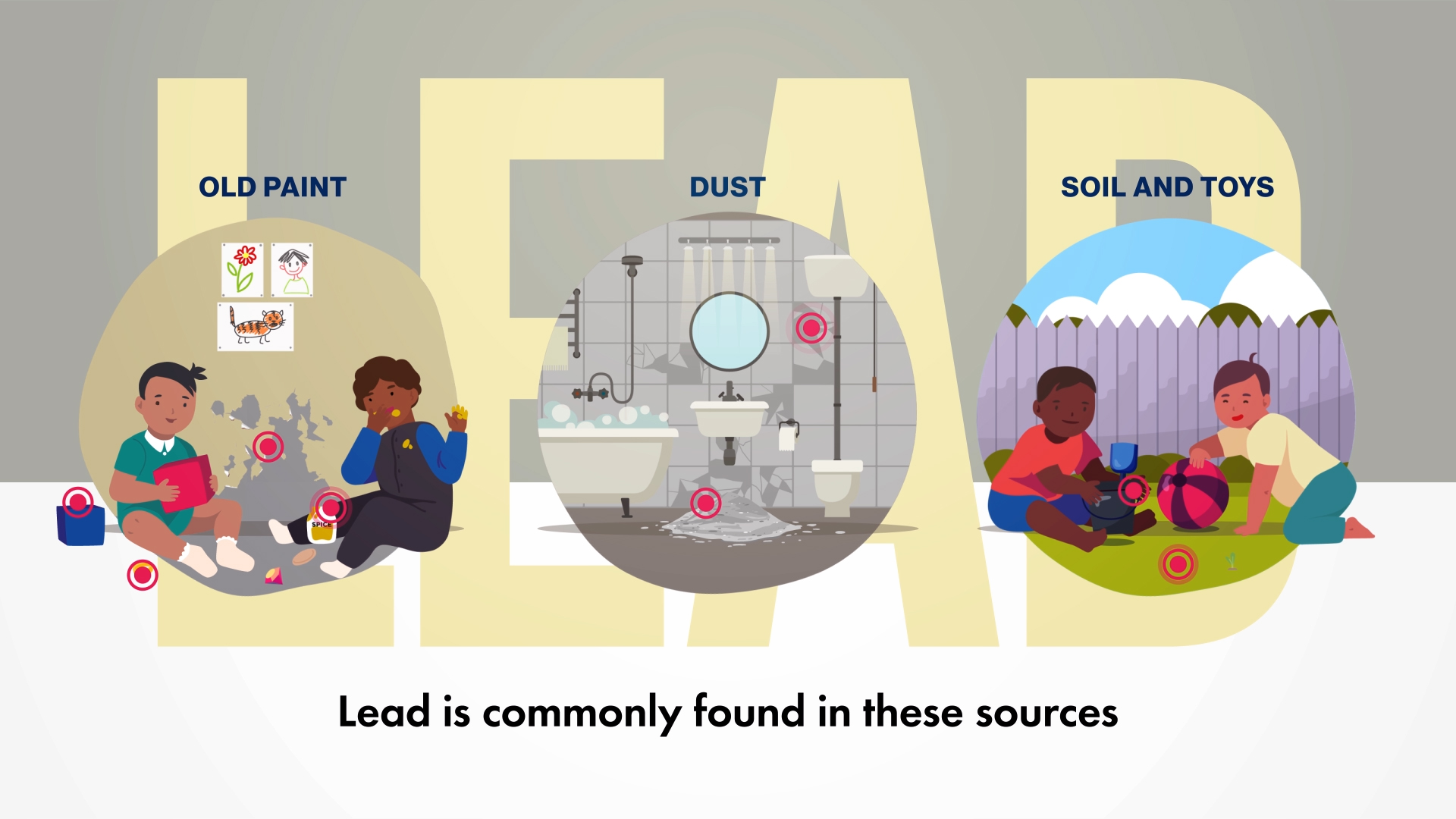
common source of lead exposure that is likely to impact children in the
Fredericksburg region is lead paint. While lead was banned in paint in the U.S.
in 1978, about half of homes built before that year have lead-based paint, and
the likelihood of lead paint being present increases with the age of the home.
Intact lead
paint may not pose a danger, but any lead paint that is chipping or peeling is
a threat, as chips can be ingested by children. Lead paint on high-friction
surfaces such as entryways and windowsills also poses a threat, as these
surfaces often throw off lead dust that children can ingest as they play on the
floor and put objects and hands in their mouths.
In addition
to paint in homes, lead can also be found in:
·
Water
contaminated with lead from lead service lines and leaded plumbing or fixtures.
·
Soil
contaminated by leaded gasoline or lead-based paint around the exterior of a home.
·
Consumer
products such as toys and jewelry, especially those that are old, “antique” or
imported.
·
Traditional
medicines or cosmetics, particularly imported cosmetics such as kohl and
sindoor, and some traditional medicines, such as greta or ghasard, used in
countries such as India, Mexico and Vietnam.
·
Imported
candy and spices.
·
Ceramics
or pottery used to serve or store food that is coated with glaze that contains
lead.
Parents
engaging in specific jobs and hobbies can also accidentally bring lead into the
home. Jobs in construction or demolition, battery recycling, smelting or
working at or visiting a shooting range have the potential for lead exposure.
Hobbies such as stained-glass making, hunting or fishing and pottery can also
expose individuals to lead.
Who is
most at risk for lead poisoning?
Children
under age 6 are at the highest risk. This is because they are rapidly growing
and developing, and lead exposure can interfere with these processes. They also
spend a lot of time on their hands and knees, and put objects and their hands
in their mouths. This is exactly what kids this age should be doing, so it’s
important to ensure their environment is free of lead. The bodies of young
children absorb lead at a faster rate than those of adults. Even small amounts
of lead are dangerous to young children.
Because we
have the ability to remediate the most common source of lead exposure for young
children—lead in the home—childhood lead poisoning is considered the most
preventable environmental disease among young children.
How does
lead exposure impact children?
Lead exposure
in early childhood can have many negative health impacts, including:
·
Brain
and nervous-system damage.
·
Hearing
and speech problems.
·
Learning
and attention issues.
·
Slowed
growth and development.
The impacts
of childhood lead exposure have long-term effects throughout a child’s life.
Children exposed to lead at a young age may start to fall behind their peers at
school because of slowed growth and development and learning and behavior
issues. This underperformance at school can cause wider-ranging impacts,
including social isolation and challenges fitting in with peers.
How can I
tell if my child has been exposed to lead?
The symptoms
of childhood lead exposure are not often visibly apparent, as most children
have no immediate symptoms. But the impacts can be long-lasting. This is why
parents who believe their children may have been exposed to lead in any amount
should contact their healthcare provider to get a blood lead test.
Blood lead
testing is recommended for children at ages 1 and 2, or up to age 6 if a child
has not previously been tested. All children enrolled in or eligible for
Medicaid or the WIC program should receive a blood lead test at ages 1 or 2.
The earlier
you test, and potentially remediate any lead exposure your child may have, the
less impact this toxin will have on your child.
How can I
prevent lead exposure at home?
Tips for
reducing exposure in the home include:
·
Wet-wipe
and wet-mop around windowsills and entryways on a daily basis.
·
Wash
children’s hands and toys regularly.
·
Do
not allow children to play in bare soil. If they do, wash their hands and
clothes immediately.
·
Cook
nutrient-dense meals full of iron, calcium and vitamin C. Nutrition
deficiencies have been linked with higher lead absorption, and a full stomach
absorbs less lead than an empty one.
·
Ask
adults who participate in jobs and hobbies that put them at risk for lead
exposure to remove their shoes before entering the home, and to change clothes
immediately after returning home.
·
When
performing renovations, use an EPA-certified lead contractor for all renovation
and repair projects that could disturb lead-based paint or other lead hazards
in the home.

Build a
lead-fighting diet
Reduce your
child’s risk of absorbing lead from the environment by serving foods rich in
iron, calcium and vitamin C.
Power
Foods:
Iron: lean red meats, beans and lentils,
tofu, whole grains, fish, chicken, turkey.
Calcium: milk and yogurt, cheese, tofu, kale,
spinach.
Vitamin C: Citrus fruits, berries, broccoli,
Brussels sprouts, kiwi, melons.
Lead can
come from unexpected sources
In 2023,
multiple reports of children with elevated blood lead levels lead the FDA to
discover elevated lead levels in apple cinnamon applesauce pouches. This led to
a recall of cinnamon applesauce pouches sold under the WanaBana, Schnucks and
Weis brand names in November 2023. The FDA traced the lead contamination to the
cinnamon in these products, and the contaminated products were removed from the
market.
It’s always a
good idea to check periodically for recalls, as lead is sometimes found in
surprising places. A good source is www.cpsc.gov/recalls.
Health
District Helps Parents Find and Eliminate Sources of Lead
Growing up in
a 1930s home on Franklin Street near downtown Fredericksburg, Alyce Finch had
no idea about the potential dangers that the lead paint in her treasured family
home posed. But today, as a public health nurse for the Rappahannock Area
Health District (RAHD) and leader of the district’s newcomer health program,
Finch helps families understand how to be vigilant about potential lead
risks—especially in a community that once billed itself as “America’s Most
Historic City.”
“We do have a
lot of older housing here,” Finch said. “And even if you are in a newer home,
your kids may be staying with family or caregivers that may contain different
lead risks.”
Finch
experienced this worry when her own children began staying with her parents in
her childhood home—she made sure to have her children’s blood lead levels
tested to ensure they weren’t at risk.
The blood
lead test—which involves drawing a small amount of blood from a finger prick or
a vein—is the first step for any parent wondering whether lead exposure is a
problem. This test should be performed by a health provider on children ages 1
and 2, and can be performed up to age 6 if a child hasn’t been previously
tested, since children ages 6 and under are at the highest risk for the
negative impacts of lead exposure.
You will
likely receive a call from your provider with results within a couple of days.
For results showing elevated blood lead levels, parents will receive a call
from Finch or her colleagues at the RAHD.
Finch and
other public health nurses talk to parents whose children have demonstrated
elevated blood lead levels, asking a series of questions to try to narrow down
where the lead exposure is coming from.
In addition
to lead paint in old homes, Finch talks to parents about how particular jobs,
such as gunsmithing, construction, smelting or battery recycling, can expose
them to lead, and how imported toys, cosmetics, medicines or spices can also be
a source.
“We want to
identify where the lead is coming from. Often, it is the older houses, but with
young children, you know, they put their hands on everything. So sometimes it
could be that it’s not an older house, but lead is in the soil, because there
was an older house on that lot previously,” she said.
She refers
parents to the Lead Safe resources at vdh.virginia.gov/leadsafe and also asks
them to check product recalls with the Consumer Product Safety Commission, as
these can sometimes be a source of lead exposure.
She also
talks about nutrition, and how getting more calcium, iron and vitamin C in the
diet can help decrease blood lead levels.
She
encourages parents to have another blood lead test to see how things are
changing. The timeframe for this follow-up blood lead test depends on the
child’s blood lead level.
Over the
years, Finch has noticed that good prevention of lead exposure in children is
grounded in solid preventative care. She encourages parents to understand their
eligibility for Medicaid, WIC and other programs that can connect them with
resources such as nutrition counseling if needed.
And when
transportation or other barriers keep parents from getting regular well checks
for children, Finch refers them to Unite Us, a service that helps individuals
learn to access community health resources such as Medicaid transportation,
housing assistance and more. This can be found at
vdh.virginia.gov/rappahannock/rahd-assistance/.
More than
anything, Finch wants parents to know that RAHD can be a resource for helping
them identify potential sources of lead contamination and finding the resources
in the community that could help them mitigate those sources.
“I want them
to know that we are here to help,” she said.
State
Program Can Help With Cost of Lead Removal
The
Department of Housing and Urban Development estimates that 38 million American
homes (40% of all housing units) contain some lead-based paint that was applied
before the residential use of lead paint was banned in 1978.
For many
homeowners, the prospect of remediating lead hazards can be daunting, but a
HUD-funded program administered by the Virginia Department of Housing and
Community Development (DHCD) can help.
DHCD’s Lead
Hazard Reduction Program administers HUD funds to remediate lead-based paint
hazards in eligible households.
To be
eligible, a home must be built before 1978. For owner-occupied households, to
qualify, a child under the age of 6 must be permanently living in the home,
visiting twice or more per week, or an expecting mother must be living in the
home.
“Our priority
is to serve children with elevated blood lead levels, but we serve any
household with young children who are living with lead hazards,” said Susan
Hill, Lead Hazard Reduction Program manager with DHCD.
Rental
properties built before 1978 can be eligible for assistance without having a
child present, because they turn over and could house children in the future,
Hill said, “But we’d ask that landlord to prioritize renting to a young
family.”
The program
also has income stipulations on eligibility. Homeowners must make 80% or less
of the area median household income. For the city of Fredericksburg, that would
be at or below $97,800 per year for a household of 4.
“Once we’ve
done our initial lead inspection and risk assessment, we are able to determine
exactly where there is lead-based paint in the home and then on what surfaces
it is deteriorating,” Hill said. “Our risk assessment also tests dust samples
throughout the house as well as soil and water.”
The program
then engages contractors certified in lead-safe practices to remove or
stabilize lead hazards found in the home. One of the most common repairs the
lead hazard reduction program makes is the replacement of windows, since
windows with lead paint can throw off lead-contaminated dust and chips.
The program
also ensures that lead-based paint has been removed from other high-friction
surfaces such as doorways. Grant money can also pay for temporary lodging if
families need to relocate during the work.
Once the work
is complete, program administrators perform a clearance test, taking dust wipe
samples from the same places the hazards were first located to ensure the home
is now lead-safe.
The
inspection process also leaves homeowners with a document that shows where lead
paint is present in their home.
“If they have
any future plans to renovate, they will know if they’ll be disturbing any
lead-based paint,” Hill said.
Since its
inception, the program has remediated lead in 97 Virginia homes. To start an
application or learn more, visit dhcd.virginia.gov/lhr.
“We are proud
to offer this critical public health resource,” Hill said, “and we want
eligible families to take advantage of it.”
This
information has been brought to you by the
Virginia
Childhood Lead Poisoning Prevention Program