

Take steps now for a healthy fall and winter
The Rappahannock Area Health District encourages families
to prepare now for the winter spread of respiratory illness.
Fall can be a busy season for families with children. But
nothing derails a packed schedule like the flu. So, when pumpkin-spice items
start showing up on grocery-store shelves, make that your signal to schedule
the annual vaccines that can help defend your family against the most common
ailments that are known to circulate in the colder months.
Shots for flu, COVID-19 and RSV are available at area
pharmacies and physicians’ offices. A great first stop for scheduling your
family’s shots is www.vaccines.gov. You
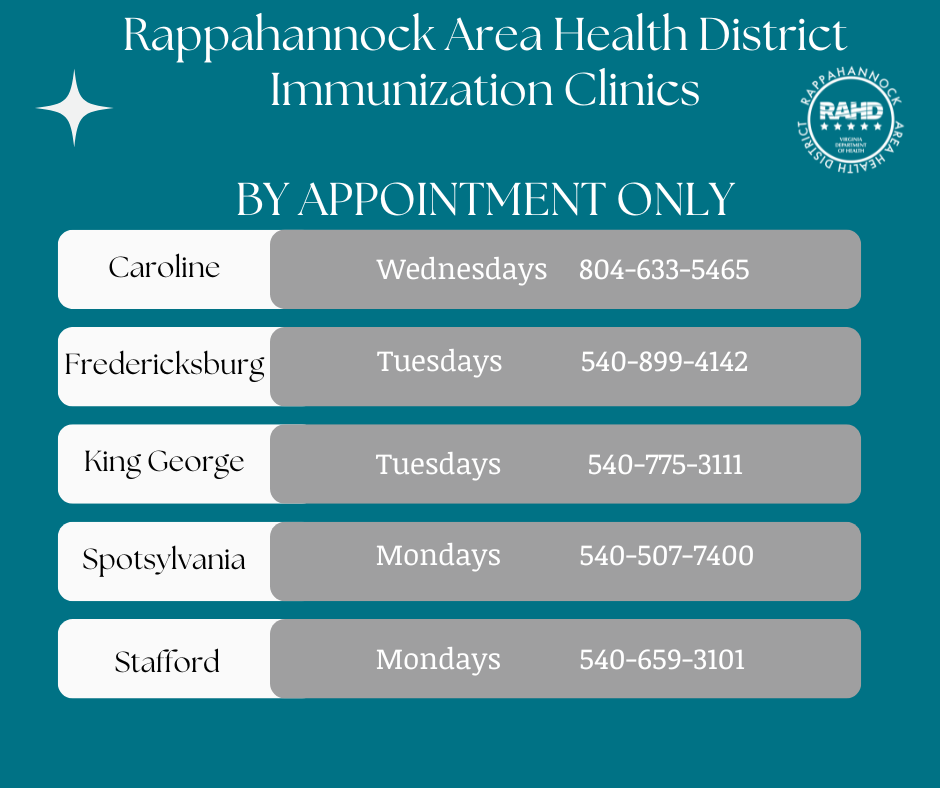
can also visit the Rappahannock Area Health District’s vaccine clinics.
As the 2024-25 school year opened around the Fredericksburg
region, Virginia was experiencing an increase in cases of COVID-19. On top of
this, respiratory illnesses and influenza traditionally peak from October to
February. RSV, a respiratory illness that is particularly difficult for the
very young and very old, is also on the rise. And pertussis, also known as
“whooping cough” is also impacting more Virginians than in years past. The
Rappahannock Area Health District offers this guide to preventative measures
for these illnesses to help you make the best decisions for yourself and your
family this fall and winter.
FLU
What is it? Influenza is a contagious respiratory
illness caused by viruses. Flu cases occur year-round, but they typically peak
during October through February.
Who should get the flu shot? The CDC recommends
routine annual influenza vaccination for everyone 6 and older. Getting the shot
in late September to early October ensures that you will have peak protection
(which lasts for four months) through the height of flu season, but it’s never
too late to get this year’s shot. It’s OK to get the flu shot at the same time
as the COVID-19 booster.
COVID-19
What are current trends? While severe illness and
hospitalizations due to COVID are lower than two years ago, Virginia did see a
spike in cases over the summer when more people congregated inside
air-conditioned buildings. Vaccinations have played a vital role in reducing
the risk of infection, including severe illness.
How can I make sure I am fully vaccinated? A 2024-25
version of the COVID-19 vaccine is now available from three different
manufacturers. This new version protects against strains of the virus that have
circulated more recently than when most individuals had their latest COVID
shot. The CDC recommends that everyone 6 and older receive this updated
vaccine. It is especially important for those who are 65 and older, who are at
high risk for severe COVID-19, or who have never had a COVID-19 vaccine. The
CDC also states that the updated shots are especially important for women who
are pregnant, breastfeeding or trying to get pregnant.
Can I get the COVID-19 shot at the same time as the flu
shot? Yes.
RSV
What is it? Respiratory syncytial virus, or RSV, is a
respiratory virus that infects the nose, throat and lungs. Its symptoms look a
lot like the common cold, flu or COVID-19. According to the CDC, RSV tends to
peak in December and January.
Who is most at risk? RSV does not typically cause
complications in healthy adults and children, but it poses a significant risk
to older adults and children under 6 months. RSV is the leading cause of
hospitalization among U.S. infants.
Who should get vaccinated? Vaccines have been
developed and are recommended for three specific groups of individuals. These
single-dose vaccines are not annual shots, so you only need to get them once.
CDC recommends RSV vaccines for:
·
Adults over 75 years of age, or those 60-74 who
have chronic heart or lung problems, compromised immunity or reside in a
long-term healthcare facility.
·
Pregnant women, between 32 and 36 weeks’
gestation.
·
Infants younger than 8 months who were born in
October through March, whose mothers did not receive the RSV vaccine.
PERTUSSIS
What is it? Pertussis is a bacterial infection also
known as whooping cough. It is a highly contagious respiratory disease that
poses a high risk to babies under 1 year of age and individuals who are
immunocompromised or have asthma.
Are cases increasing? Yes. As of Aug. 1, more than
five times as many pertussis cases had been reported in Virginia than at this
same point last year, according to the State Health Commissioner.
How can we prevent it? The Virginia Department of
Health recommends that everyone stay up to date on their pertussis
vaccinations. The pertussis vaccine is combined with vaccines for tetanus and
diphtheria as a single injection. The combination vaccine (called “DTaP”) is
given at 2, 4, 6, and 15 months of age and when a child enters school. Current
recommendations also advise that children receive a single booster dose of
vaccine (called “Tdap” for this age group), at 11-12 years of age. Adults who
anticipate having close contact with an infant younger than 12 months (pregnant
women, new parents, grandparents, childcare providers, and healthcare
providers) also should receive a single booster dose.
CLEAN HANDS STOP GERMS
While vaccines are an essential line of defense, it’s still
important to observe all of the commonsense measures that help stop the spread
of disease. Stay home from work and school when you are sick. Cover your mouth
when you cough and sneeze. Wear a mask if you think you could be contagious.
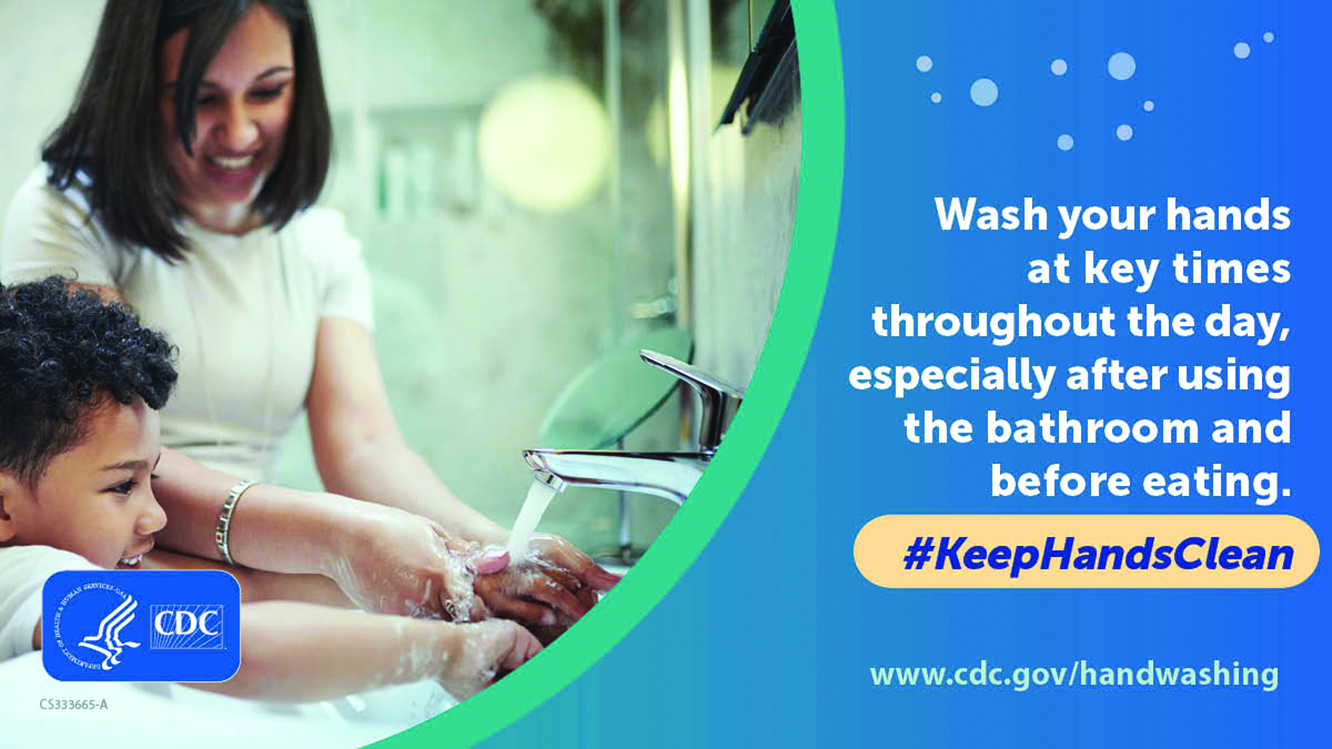
And wash your hands.
Oct. 15 is Global Handwashing Day. This is a great time to
add a little fun to this important skill and teach young children good
hand-washing habits. Here are a few ideas:
·
Sing a fun song while washing hands to ensure
they scrub for at least 20 seconds. Songs like “Happy Birthday” sung twice or
the “ABC” song work well.
·
Use glitter to represent germs. Have kids rub
glitter on their hands and then try to wash it off. This shows how thorough
they need to be to remove all the “germs.”
·
Fill a bin with soapy water and let kids wash
toys or their hands. You can even freeze water in latex gloves and color
them with washable markers to represent germs that need to be washed off.