

The beaches are packed, airports are slammed with summer
travelers, and the highways are bumper-to-bumper most days of the week with
people fleeing and returning home. School books and teachers and homework seem
a world away. In reality, they’re less than a month away.
The big news this year involves cell phones. Or, more
specifically, the absence of them. Fredericksburg, Caroline, King George, and
Stafford are all working through policies that would restrict student cell phone
use in school. In Spotsylvania, the possibility of a ban was first discussed at
the July 8 board meeting, though any action will likely not occur until next
school year.
The most-stringent policy currently looks to be in
Fredericksburg, where middle- and high-school students will be required to
store phones in Yondr pouches, which are then locked and can only be unlocked
at designated unlocking stations. Students will put the phones in pouches upon
arrival and will not be allowed to remove them with limited exceptions during
the day.
The trend toward phone-free schools has been building for
several years as it has become more apparent that phones are a significant
disruption in classes. Here’s what you need to know about the issues. (To learn
about the policies in your districts, speak directly with your school, as
policies are evolving quickly.)
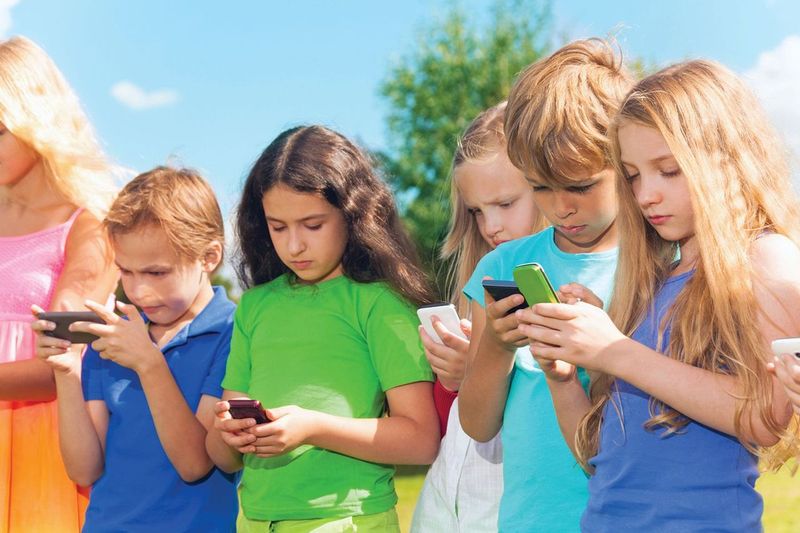
• More than
mere distraction to learning, students’ dependence upon smartphones are
described as addiction. A study by Common Sense Media in 2016 found that half
of students were addicted to their smartphones. Those percentages are surely
higher now.
• Smartphones
have a destructive effect on students’ ability to concentrate and process
information. One of the earliest studies was conducted in England by
Louis-Philippe Beland and Richard Murphy. Their research paper “Ill
Communication: Technology, Distraction & Student Performance” found that
performance on high-stakes tests following cell phone bans in select English
districts improved student test scores by 6.41% of a standard deviation. More
eye-opening was the finding that the improvement was 14.23% of a standard
deviation among the most disadvantaged and underachieving pupils.
Predictably, parents and students have pushed back, but
right now the schools in this area are holding strong. So be prepared to help
your children deal with what is sure to be a different classroom environment this
school year.
One way to do this is to recognize that adults are no less
addicted to their phones than their children. How addicted are we? Almost half
of us say we get panicky when our phone battery drops below 20%. Three-fourths
of us check our phones within five minutes of receiving a notification. The
same percentage use our phones in the bathroom.
As with so many things, modeling behavior is the best way to
lead others to a place they don’t want to go. Here are tips for families as they
prepare for school’s return.
• Disallow
phones while eating. This not only removes the offending device, but it creates
space to work on conversational skills, which younger people are struggling
mightily with these days.
• Plan
phone-free Fridays. Go for walks, paint a room, read, go to a concert, go
shopping, whatever activities you plan for the day, plan to do them with your
phones at home. Remember, the problem isn’t just using the phone, it’s being
physically separated from it.
• Charge
phones at night in any part of the house but the bedroom. This improves one’s
comfort level with being physically apart from your phone.
This is going to be a significant change for students.
Parents shouldn’t ask them to do it alone. Go phone-free with them. The
separation will be tough at first, but the face-to-face interaction will yield
life-long benefits.